DAILY FILM DOSE: A Daily Film Appreciation and Review Blog

Tuesday, 6 March 2012

The Legend of Drunken Master

The Legend of Drunken Master aka Drunken Master 2 (2000) dir. Chia-Liang Liu
Starring: Jackie Chan, Anita Mui, Long Ti, Andy Lau

***1/2

by Alan Bacchus

Even before the American release of this film, HK action buffs already knew it as Drunken Master 2, a legendary film certainly in my household for its astonishing fight sequences featuring Jackie Chan at his most lethal, most athletic, toughest and funniest. Remember, these were the days before the internet, and thus accessibility to foreign films not released stateside was limited. But for me access to Drunken Master 2 came from my membership at my local strip mall LaserDisc-renting Chinese videostore in Mississauga.

After the release of Rumble in the Bronx in North America in 1995, Jackie Chan finally had success overseas 15 years after he made his American debut in the early '80s. Other than the retched Rush Hour movies, Chan’s subsequent releases were older HK films re-dubbed and sometimes re-edited for North America. 1992’s Police Story 3 became Supercop in 1996, Police Story 4 became First Strike, and it was the same with Operation Condor, Twin Dragons and Mr. Nice Guy, each with decreasing box office returns and general public hype.

And so in 2000 when The Legend of Drunken Master was released, it was just another Jackie Chan movie to most people. But to the LaserDisc-watching freaks like me it was something special. However, what a shame that a meager $11 million box office take meant that arguably the film with the greatest ever hand-to-hand fight sequences was only glanced over.

What are the best kung-fu movies ever made? Maybe those Jet Li/Tsui Hark Once Upon a Time in China flicks? Or Crouching Tiger, Hidden Dragon? Or the Yhang Zimou mystical epics? Enter the Dragon? The old school Five Deadly Venoms? Drunken Master 2 is a marvel because its kung fu is boiled down to hand-to-hand combat, achieving a fresh 'purity' in action largely unaided by elaborate weaponry, pyrotechnics, highflying wire techniques and, most definitely, computer graphics - just the beautiful and astonishing choreography of hands and feet flying.

It’s the turn of the century in China. Jackie Chan and his family have just bought a rare and potent root of ginseng from a neighbouring province and are crossing the border to get back home. Chan, aged 40 at the time, plays the ‘teenaged’ Fei-hung and son to his disapproving father, Kei-ying (Long Ti), who runs a martial arts school and garden/nursery. Fei-hung the troublemaker decides to hide the ginseng in a fellow passenger’s suitcase to avoid the customs charges. Of course, there’s a mix-up and Fei-hung winds up with some other kind of valuable artifact coveted by a nefarious group of imperialist thieves.

When the baddies come looking for the artifact, Fei-hung is forced to defend himself, protect his mother, get back his ginseng and do it all without pissing off his father. Fei-hung’s technique is ‘drunken boxing’ – his own personal style which mimics the wobbling and swaying of a drunken person, thus putting his opponent off guard. But when he actually gets drunk, like Popeye, Fei-hung gets stronger, quicker and more badass.

As usual, it’s disposable plotting for Jackie Chan, but the old world China setting is made more bearable than say the 'New York' locale of Rumble in the Bronx or the international espionage of First Strike. Again, Chan’s vaudevillian/silent cinema comic timing is ramped up, creating a fast-paced, zany comedy or errors. The family core of Fei-hung, his father and his step-mother forms a fun three-way comic dynamic. Anita Mui is the stand-out as the stepmother (actually 9 years Chan’s junior!). She appears to be acting in a film all her own, as her heightened and exaggerated mannerisms go beyond even Chan’s tone of silent-era influenced anachronism.

But it’s the awe-inspiring fight sequences that made Drunken Master 2 the best kept secret among us suburban LaserDisc genre-junkies. If not the greatest fight sequence ever put to film, then at least my personal favourite is the incredible tea-house scene in the middle of the picture. Fei-hung and his buddy sit down on the upper floor of a tea house for a peaceful drink when out of nowhere a hundred axe-wielding thugs storm the building and attack them. The duo proceed to beat down these badasses and tear apart the entire building with bamboo poles and brute strength. It’s over-the-top and implausible, 2 vs. 100, but the choreography is so precise we actually believe two people could do such damage and fend off a hundred guys. The Wachowski Bros. would later film their own version in Matrix Reloaded with their Neo vs. 100 Smiths fight but with the aid of mondo computer effects.

This is just one of a half-dozen equally inspired and monumentally artistic and brutal hand-to-hand fight sequences and the reason my LaserDisc player in the 1990s got a good workout replaying it over and over again.

The Legend of Drunken Master is available on Blu-ray from Miramax/Walt Disney Studios Home Entertainment, in addition to three other martial arts classics – Hero, Iron Monkey and Zatoichi: The Blind Swordsman.


Monday, 5 March 2012

Like Crazy

Like Crazy (2011) dir. Drake Doremus
Starring: Anton Yelchin, Felicity Jones, Jennifer Lawrence, Charlie Bewley, Alex Kingston, Oliver Muirhead

****

By Alan Bacchus

Drake Doremus’s epic, romantic, bittersweet journey of love, a deserved Sundance Winner seemed to get the short shrift in its domestic theatrical release. It's one of the best films of the year, now available on DVD.

Anna and Jacob are in love. They meet in the first scene in a college class, follow each other home, hang out, giggle, hold hands, eat, play around, maybe they kiss, maybe they don’t. Either way they are hopelessly in love. Oh what bliss. What could possibly separate them? Well, Anna is British and on a school visa, which of course will run out. But she’s a romantic and nothing can stop her from being with her man. So she remains in the US to stay in bed and make love for two months.

She can’t escape reality though, and it comes crashing down when Homeland Security detains her for violating her visa after a brief trip back home to the UK. Now it’s a long distance relationship with the US government separating them. Thus begins the roller coaster ride of love, including the ups and downs, for Anna and Jacob – like Going the Distance made by Michael Winterbottom.

After the opening act, Doremus puts his cynical hat on and tests our ability to believe that these two should be together. So are we watching Blue Valentine? Or (500) Days of Summer? Doremus keeps us on edge at all times. Anna flirts with other boys back home, and Jacob does the same with girls, but their iPhones always connect them. Doremus constantly oscillates between these extremes of lovestruck pit-of-your-stomach romance and the agonizing missteps and miscommunications that create roadblocks to finding love. Just when we think they’re splitting up for good, all it takes is a short text across the ocean to jumpstart the rollercoaster ride once again.

Anton Yelchin and Felicity Jones are close to the last word as recent on-screen romantics. Doremus’s frequent close-ups connect the characters like intertwining vines. Whenever they’re in the same space together on screen they seem to engage in a graceful sensual dance.

Pitch perfect hip music complements the new millennium courtship in which these two are engaged, not to mention the Winterbottom/Boyle visual aesthetic employed by Doremus. And so, just as I’m close to shooting myself after having to constantly hear about the authenticity in the highly overrated Blue Valentine, I can latch on to Like Crazy, the superior antidote to that other film.

Like Crazy is available on DVD from Paramount Home Entertainment

Sunday, 4 March 2012

Nightwatching


Nightwatching (2008) dir. Peter Greenaway
Starring: Martin Freeman, Jodhi May, Emily Holmes, Eva Birthistle

**

By Alan Bacchus

Enjoyment of Nightwatching will depend largely on your ability to stomach the tedium of Peter Greenaway – that intensely idiosyncratic British director known for lavish, overly theatrical and often debaucherous art films – the British version of late-career Fellini. Greenaway's latest tells the story of Rembrandt in the golden age of the Dutch empire and his journey to painting his most famous work, Nightwatch.

Like Guido in Fellini’s 8½, the film establishes Rembrandt, already a revered painter, as highly coveted by everyone to commission his next work. He chooses an offer from the Amsterdam Civil Guard, depicting the militia in a group portrait, only to get embroiled in a murder mystery that exposes the political crookedness of the group.

All the hallmarks of the Greenaway style are here, including impeccably composed classical frames heavily populated with lavishly costumed characters and extravagantly decorated production design. While visually stunning, like most of his work, it's a difficult film to penetrate. Lengthy, wordy dialogue sessions play out the complex conspiracies and historical analysis of the great painter and his work. There’s obviously great intelligence and deep character and artistic examination going on, almost all of which, admittedly, went way over my head.

For me, the only watchable element from these doubting eyes is Martin Freeman’s witty performance. Freeman, known for his affectionate Tim character in the original British version of The Office, inhabits Rembrandt’s skin admirably, giving us a highly accessible entry into what probably could have been a stodgy old theatrical character, much like the working class affability of Tom Hulce’s Mozart in Amadeus.

As usual, the visual palette includes large expansive and sometimes near-empty sets, theatrical in look, feel and sound. Often the characters talk directly to the audience like a Shakepearean soliloquy, the same feeling we got from the staginess of Lars von Trier’s Grace trilogy. There’s even a distinct stage echo in the sound design, which reverberates the actors’ dialogue.

Thus, Nightwatching ultimately becomes a highly esoteric affair – either for history or art scholars, or Greenaway junkies. For me it was a tough struggle, and I disappointed myself when I couldn’t really hold my attention to the film's complexities. Oh well, I never was a Greenaway fan, and this confirms I never will be. To each his own.

Nightwatching is available on DVD in Canada from Alliance Films.

Friday, 2 March 2012

La Jetee

Le Jetee (1962) dir. Chris Marker
Starring: Hélène Chatelain, Davos Hanich, Jacques Ledoux

****

By Alan Bacchus

The deep pop-culture penetration of this short experimental film from the ‘60s is a remarkable achievement. At a mere 28 minutes in length and featuring only still photos, it creates remarkably strong and poignant high concept science fiction with a strong humanist/existential drama. The piece was surely a vital influence on Terry Gilliam’s 12 Monkeys, as well as James Cameron’s time bending love story in The Terminator and, by association, any time travel film after that. Even Christopher Nolan’s Inception is born from the perplexing notions of manipulating dreams and time paradoxes. Hell, even Groundhog Day owes something to La Jetee.

It’s the aftermath of WWIII in Paris, where most of the survivors have retreated to the underground to avoid the nuclear fallout. A team of scientists experiment with time travel in the hopes of finding resources for the present. The unnamed hero of the story (Hanich), who narrates his childhood memory of waiting outside an airport gate with his mother and seeing a desperate man shot to death, is chosen as the subject because of his deranged mental state, which has the ability to withstand the pressures of the experiment.

Several attempts at going back into the past results in the man meeting an alluring woman from the past. Each journey brings him closer to her, eventually forming a genuine relationship. After completing his mission his doctors turn on him and track him down in the past to assassinate him, but not before he comes face-to-face with a remarkable existential revelation.

As powerful as the moving image has proven to be since the birth of cinema, Chris Marker has not forgotten that the still image can be even more powerful. Each of the 800 or so still images presented in this piece has as much emotional weight and beguiling mystery as anything a motion camera could capture. Marker could have used a motion camera, as the picture cut together has some of the same rules and language as traditional cinema – wide shots, close-ups, traditional coverage, etc. – which makes his choice of stills so inspired. It acts like a scrapbook of the events.

But La Jetee is experimental through and through, and although it resembles the general arc of its feature remake, 12 Monkeys, the film is consciously aloof and mysterious. It’s constructed more like a series of dream experiments than time travel – I don’t know if the term time travel is ever used. But in the end Marker is clear to make his point about the hero's journey, a spiritual love story across space and time, which connects with astonishingly profound satisfaction.

La Jetee, packaged with Chris Marker’s 1983 essay doc, Sans Soleil, is available on Blu-ray from The Criterion Collection.

Thursday, 1 March 2012

The Kid With a Bike


The Kid with a Bike (2011) dir. The Dardenne Brothers
Starring Cécile de France, Jérémie Renier, and Thomas Doret

***

By Blair Stewart

Last year Belgium's Jean-Pierre and Luc Dardenne (Rosetta, The Son and The Child) returned to Cannes with their winning cinéma vérité formula. Approaching films with a focus on lower-class European sociology, the Dardennes' storytelling engages you with films of emotional complexity that are told with what initially appears to be docu-drama simplicity.

The Kid with a Bike follows the lousy situation of 11-year-old Cyril (Thomas Doret), dumped by his father (Jérémie Renier, a grown-up follow-up to his role in The Child) into foster care. Cyril is a ball of thwarted energy, furiously pecking away at his perceived imprisonment by jumping fences, badgering his councillors and doing anything to burrow back to his absentee pa. He breaks out of the home and runs smack into hairdresser Samantha (Cécile de France), who in turn establishes an often fraught relationship with Cyril as she becomes his surrogate mother. The baggage and vulnerability of Cyril is a weighty task for Samantha, with the child's greatest danger coming from a mentorship with an adolescent thug cut from the same cloth as the boy. In the thug, the Dardennes effortlessly sidestep trite judgement of Cyril's bad company with a simple moment involving the thug caring for his invalid grandmother. A moment like that sticks with me, as a dimension is added to a stock character who has his own motivation for why he would commit crimes. The story has a circular purpose to it, with Cyril's behaviour dictated by his father's choices in another pleasant surprise where I'd almost taken the Belgian filmmaking duo for granted with their script.

The Kid with a Bike doesn't break new ground for Jean-Pierre and Luc, but of their major releases over the past two decades, this is their most overtly sympathetic film – it hurts to watch Cyril. Cécile de France is lovely in her working-class role, as she communicates the interior scheming of a good woman nursing a damaged kid. Thomas Doret is a wonderful child actor, his buzzing restlessness reminiscent of Antoine Doinel in The 400 Blows. I thought of Truffaut's film often during the long moments of Cyril riding his bike, urgently trying to gain a step in a hopeless situation.

What's kept me from rating The Kid higher is that with each new film, the Dardenne pair tread closer to old grounds and could certainly expand well beyond their safety net. The film's soundtrack is also periodically breached with an overwrought score yearning for catharsis rather loudly.

While The Kid with a Bike doesn't have the heady morality questions of The Son and its payoff, the Dardennes' latest is a fine film that will reward their audience.

The Kid With a Bike is available on DVD this week from EOne Films in Canada

Wednesday, 29 February 2012

Lost Highway


Lost Highway (1997) dir. David Lynch
Starring: Bill Pullman, Patricia Arquette, Balthazar Getty, Robert Blake

***½

By Alan Bacchus

At any given time David Lynch has the ability to make the scariest movie of all time. He hasn’t because he’s purposely avoided making mainstream movies for virtually his entire career. Lost Highway displays the best of Lynch’s supreme talent in creeping us out with seemingly minimal effort. It’s one of his most beguiling films even by Lynch's standards – a twisting nightmare about the dual identities and dimensions of a man who’s framed for murdering his wife – I think.

Bill Pullman plays Fred Madison, a guy who lives in L.A. with his ravenous wife, Renee (Patricia Arquette). It appears to be a relationship that is cold as ice, as the two rarely share more than a few even-tempered words with each other. A series of anonymous packages start appearing at their door containing video cassettes that have been mysteriously taped from within their house. When one of the videotapes shows Fred killing his wife he’s suddenly found to be a murderer and is sent to prison. While in jail Fred morphs into a younger man with a different identity – Pete Dayton (Balthasar Getty).

After Pete is released from prison the film switches gears to observe his doppleganger life. He encounters some of the same seedy L.A. underworld creepsters involved in setting Fred up for murder. Pete is seduced by a blonde version of Renee – Alice Wakefield – who is married to the mob boss heavy, Mr. Eddy (Robert Loggia), who also goes by the name Dick Laurent in the Fred Madison dimension. When the time is right Pete morphs back into Fred just in time and enlists the help of a creepy, eyebrowless mystery man (Robert Blake) to exact revenge on his enemies.

Out of all of Lynch's films, Lost Highway features some of his best cinematography. Peter Deming (Scream) is at the helm on this film, and the darkness and shadows play a large role in creating the suspense of the unknown. The audience is continually trying to figure out what is going on, and Deming enhances this feeling by limiting what’s visible on screen and purposely framing in the shadows. The film is so delicately underlit that it’s difficult for ordinary standard definition DVDs/televisions to hold the heavy contrast of black and white. It’s a shame that a Blu-ray version is not yet available.

Patricia Arquette deserves some kind of award for her performance as Renee/Alice. She undresses for Mr. Lynch in no less than five scenes, not including the black and white porno film her character appears in late in the film. Though she’s always ravishing and incredibly sexy, I couldn’t help but feel a little dirty for watching and enjoying Arquette get naked so many times. If the film wasn't directed by Lynch and was perceived as experimental art cinema, would we call it exploitation?

Of course you can argue that the film is about exploitation. But who exactly is being exploited? Fred appears to have been set up for the murder of his wife, but by whom? Is it Alice, Renee’s doppleganger sister? Or is it Mr. Eddy/Dick Laurent? Or is it Renee/Alice who is exploited by Laurent into being his porn-star sex slave. I’d argue it was manipulation as opposed to exploitation. Either way, does it justify Arquette’s depiction on film? Since the last DVD release from 2008 is devoid of all special features, we don’t get to know Ms. Arquette's reflections on the film. They will likely remain a mystery.

I’ve had many debates comparing this film to Mulholland Drive. The themes of dual identities and the subconscious ability to switch between them in times of trauma or need inevitably marry the two films together. I personally prefer Mulholland Drive, which moves the audience between extreme emotional highs and lows and makes a clear statement about the dreamworld vs. reality of Hollywood. If there’s a fault to Lost Highway it's that it never succeeds in making a clear point. But as an exercise in style, it’s a masterpiece of psychological horror and sustained suspense. Enjoy.

Tuesday, 28 February 2012

Unstoppable

Unstoppable (2011) dir. Tony Scott
Starring: Denzel Washington, Chris Pine, Rosario Dawson, Kevin Dunn, Ethan Suplee

***

By Alan Bacchus

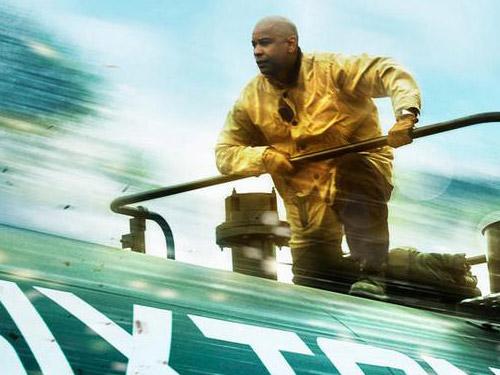
Yesterday in southern Ontario a train derailed killing three engineers and injuring many other passengers. It was a sad day, which also happened to be the day after I watched this Tony Scott action movie on Netflix, as I happened to miss it last year. The train has been such an important part of our economy and culture for a couple of centuries, and it has also been a frequent setting for cinema.

There’s something cinematic about the power of a train, from those first Edison films to John Ford's breakout film The Iron Horse to Hitchcock’s use of the metallic beast as a metaphor for his characters' isolation and confinement (and in the case of North By Northwest, the consumation of his characters’ sexual tension).

In Unstoppable action veteran Tony Scott finds an interesting film in a real story of a train carrying flammable diesel fuel running wild out of its depot on a crash course with a small Pennsylvania town. The accident happens when a lazy and portly train engineer (Suplee) gets out of the train to switch tracks while it's moving. Unfortunately, when the throttle level moves on its own, it accelerates the train, leaving the ol’ fatty gasping for air.

Enter Denzel Washington and Chris Pine, an old cynical veteran paired with a wet-behind-the-ears engineer. They’re off on their own journey, business as usual, but bickering about union gripes and various other working class burdens. Suddenly, on this random day both men get thrust into this adventure with a chance to save lives and reclaim their confidence and pride in their jobs.

This is disaster filmmaking 101, where the threat of an inanimate object on people’s lives serves as the chief antagonist, and the screenwriters plug into interpersonal conflict as a proxy for a non-existent human enemy. In this case it’s Kevin Dunn playing the white collar, suit-wearing lackie who wants to derail the train on purpose to avoid disaster. But Scott and company aren’t content to characterize Dunn in standard black and white terms. He’s clear to show Dunn as a former rail yard workman instead of an ignorant desk jockey. His end goal is the same as our heroes, but they have a differing opinion on which plan will work.

For our working class heroes, they desire to use their own train engine to catch up to the half-mile-long wild train, hook onto its back like a caboose and slow it down enough for it to successfully navigate past a dangerous dogleg turn.

Scott successfully cuts back and forth between Washington and Pine, the men and women relaying instructions from the dispatch centre, and a whole lot of helicopter shots, crash zooms and quick cuts of the run-amuck train zooming past the camera. We don’t get too many of these disaster pictures anymore. In the '90s we regularly got one or two every season, thus over-saturating the genre. And so, in moderation, a film like Unstoppable can successfully stimulate us.

After watching the film I just had to look up the ‘real story’. According to the news clip I found on youtube, the film could barely warrant the use of the term ‘inspired by’. There were very few, if any, lives threatened in the real story, but there were just enough for Hollywood to turn it into money making entertainment.

Monday, 27 February 2012

Pretty Woman


Pretty Woman (1990) dir. Garry Marshall
Starring: Julia Roberts, Richard Gere, Hector Elizondo, Jason Alexander

**½

By Alan Bacchus

Has there ever been a more glamourized movie about prostitution? Garry Marshall's rom com classic about a hooker with a heart of gold who falls in love with a luxorious millionaire birthed the enormous career of Julia Roberts and perfectly represents her working class spriteliness.

Pretty Woman was made in 1990 and reflects the tale end of the finance-sharking 1980s. It’s really just another retelling of the classic rags-to-riches story. Whether it’s Cinderella, Pygmalian, My Fair Lady and even The Elephant Man, it’s a universal story that seems adaptable in almost any medium - poor lower-class woman is plucked from obscurity and thrown into upper-class society. That’s what happens to Vivian Ward (Julia Roberts), a Los Angeles hooker with integrity who’s broke and risking eviction. Like a knight in shining armour, corporate raider millionaire Edward Lewis (Richard Gere) drives down Hollywood Blvd. looking for directions. He picks up Vivian and instantly takes a liking to her. But he's not hot for sex. For some reason he wants to bring her back to his hotel and chat. He’s so smitten with the Julia Roberts spunkiness, he pays her to be his companion for the week.

While Vivian is flush with the royal treatment, new outfits, trips to the country club and the opera, her innate goodwill causes Edward to change his ruthless business ways for the better.

Stucky, Edward’s lawyer, is dramatized with maximum sliminess. There’s no disguising him as the antagonist. Jason Alexander’s short, bald, desperate persona is a perfect physical fit. And subtle visual cues, such as his allergies to the outdoors and sunlight at the polo match, as well as his emasculating miniature pool table in his office, further castrate his character.

Pretty Woman is almost as famous for its continuity errors. In fact, I had to study the errors as an exercise at film school, specifically the infamous breakfast scene, which is rife with mistakes. But the fact that this film can get away with these errors is a testament to its immersive storytelling.

In perhaps the grossest example of double-dipping, director Garry Marshall would essentially remake his own film with 2001’s The Princess Diaries, cast Hector Elizondo in the same role and even reuse some of the same dialogue.

Pretty Woman still holds up as a minor classic in the genre. Richard Gere and Julia Roberts best all of the syrupy romantic clichés – many of which were popularized by this film.

Pretty Woman is available on Blu-ray from Walt Disney Home Entertainment.

Sunday, 26 February 2012

Destry Rides Again


Destry Rides Again (1939) dir. George Marshall
Starring: James Stewart, Marlene Dietrich, Mischa Auerm, Brian Donlevy, Samuel S. Hinds

***½

By Alan Bacchus

Destry Rides Again showcases Jimmy Stewart in one of his earliest starring roles. As a spry 29-year-old, Mr. Aw Shucks is as amiable, compelling and undeniably a star as he ever was.

The film portrays a typical situation in the western genre. A corrupt frontier town (appropriately called ‘Bottleneck’) has difficulty maintaining law and order. The local sheriff is completely ineffective and is beholden to the local criminal syndicate. Even the mayor is under the corruptive influence of the malfeasants. Marlene Dietrich plays Frenchy, the local saloon owner who quietly helps the criminals cheat and steal their way to money and power.

When the new Sheriff is knocked off by a cheating gangster, Kent (Brian Dunlevy), Mayor Slade gives the badge to the town drunk, Washington Dimsdale. Instead of doing Slade and Kent’s bidding, Dimsdale considers the appointment as an opportunity to make something of his life. And so he hires an old friend and the son of a legendary lawman, Tom Destry Jr. (James Stewart). Destry arrives in town gunless and is ridiculed for his passivity toward armed violence. But beneath his easy-going demeanour is a stone cold hombre who refuses to back down against the local tyranny.

The film takes its time establishing the situation. In fact, Jimmy Stewart doesn’t appear until 30 minutes into the film. George Marshall, a stock studio director with over 150 directing credits but few classic titles, directs the film with the utmost of studio perfection. Watch the scenes from the opening titles to just after Destry arrives in town. Though most of the film takes place in the saloon through camera movement, shot selection and creative staging, Marshall manages to sustain 45 minutes of high cinema energy and action.

After Destry's introduction, Marshall stages one of the all-time great cat-fights in cinema history. It’s Marlene Dietrich as Frenchy versus Una Merkel, who plays the wife of a husband who was cheated out of his money. The fight starts out as a fall-down, hair-pulling match between the gals, but when Destry breaks it up Frenchy continues to battle the new deputy for a total of 5 minutes of bottle-throwing and chair-smashing action. The sequence is a lengthy but exciting and inspired duel of wills. Of course, it’s played for humour, but Marshall’s staging is invisible to the extensive stunts required to make the scene look real.

Though Stewart refuses to carry a gun and uses intelligence to best his opponents, the filmmakers are clear to tell us that Destry is no sissy. In fact, he’s a crack shot with a gun. At one point he picks up a pistol and nonchalantly shoots six targets with his six bullets. But in a genre where the attitudes toward violence are defined by the liberal 'western code of honour', Destry's 'non-violent' approach is a smart nod toward pacifism. These themes would be reworked and remade a number of times after Destry. Marshall would remake the film again in 1954 with Audie Murphy, and Support Your Local Sheriff with James Garner borrows its central concept of a lawman with guns. Enjoy.

Destry Rides Again is available on the James Stewart Westerns Collection from Universal Studios Home Entertainment.

Oher related postings: THE FAR COUNTRY

Here's the classic catfight scene:

Saturday, 25 February 2012

The Pursuit of Happiness

The Pursuit of Happiness (1970) dir. Robert Mulligan
Starring: Michael Sarrazin, Barbara Hershey, E.G. Marshall, Arthur Hill

**

By Alan Bacchus

Not to be confused with the Will Smith tearjerker, director Robert Mulligan’s story of a liberal student whose personal morals are challenged when he’s sent to jail mixes some genuinely honest and thoughtful reflection on the clash of liberal and conservative values while confusing illogical and cartoonish idealism, which for 1970, might have been risky and enlightening, but now is just plain silly.

The late Michael Sarrazin plays a bleeding heart liberal college student, William Popper, who is conflicted by his conservative and well-off family background. When he gets into a car accident that kills a pedestrian he suddenly finds himself charged with vehicular manslaughter and is thrust into the American establishment of courts, lawyers and police. His journey takes him from innocent student to convict to escapee and by the end he is confronted with the choice of existing in an establishment in which he doesn’t believe or fleeing for some other utopia.

It’s unfortunate the film has to start with an excruciating Randy Newman song. In fact, Newman scores a number of montages throughout the film creating a tone of cartoonish cornball – a boneheaded creative decision from a normally astute Robert Mulligan. In particular, Mulligan crafts a ridiculous transition from William’s shocking sentence of prison time to a joyous, happy song, thus diffusing all the drama of the judge’s decision. We then watch William frolicking nude with his girlfriend in complete bliss, as if he’s unaware he’s about to enter the lowest form of humanity in our social foundation. Is this the same Robert Mulligan? The same celebrated director of honesty and integrity who made To Kill a Mockingbird?

Of course it’s 1970, and though it seemed like a liberal film at the time it is completely out to lunch and is Hollywood fantasy of the highest order. It’s a shame because the opening act sets up an interesting intellectual take on the difference between moral idealism and reality. Unfortunately, the film shamelessly separates the pack into liberals good and republicans bad.

The Pursuit of Happiness constantly rides a teeter-totter of honest realism and complete ineptitude. At one point William breaks out of jail with one week left in his sentence, an act completely out of character, not to mention illogical. Add to this scene another puke-inducing Randy Newman song and it’s more cartooning around. The prison life is ridiculous. Dramatized with quirky characters and fun personalities, it’s a summer camp-like fantasy prison.

Mulligan also completely destroys the suspense of William’s flight to Canada with barely even a roadblock in his way. Sarrazin is a fine actor and extremely likeable, but his character and his morals are never really challenged, especially when the consequences would be going back to that fun Shawshank prison.

The title refers to William’s central, though slightly abstract and non-specific, goal of disillusionment of the hippie culture with the steadfastly conservative competitive culture of American society. His pursuit for utopia involves escape from family, prison and ultimately his own country with a selfish egotism, which, unfortunately, is never acknowledged by the filmmakers.

If you keep reminding yourself that this film was made in 1970, likely shot in 1969, at the height of the anti-war, anti-government and anti-establishment peace-loving hippidom, The Pursuit of Happiness could be enjoyable. If you can’t suspend your disbelief that a main character who abandons his country and cowardly refuses to stand up for his personal morals in the face of a government ideal he despises is actually heroic, then this film is not for you.

The Pursuit of Happiness is branded under the ‘Martini Movies’ DVD label from Sony Pictures Home Entertainment.

Friday, 24 February 2012

Hugo

Hugo (2011) dir. Martin Scorsese
Starring: Asa Butterfield, Chloe Grace Moretz, Ben Kingsley, Sacha Baron Cohen

***

By Alan Bacchus

Yes, it's true. I'm not as enamoured with Martin Scorsese's ‘kids’ film and multiple Oscar nominee as most others. Firstly, it's not really a kids film at all. It’s a warm-hearted whimsical fantasy for sure, but it’s something more directly related to the Jean-Pierre Jeunet/Terry Gilliam/Baz Luhrmann adult magic realism.

While there's a strong emotional core to this picture, that being the reclamation of spirit of turn-of-the-century filmmaker Georges Méliès through the journey of its young hero Hugo Cabret, the film is also overloaded with visual paraphernalia, which actually feels more derivative (of said filmmakers above) than fresh or unique to Scorsese.

The opening act seems to show off the production design and special effects. Unfortunately, the frames are too busy for the film’s own good. The CGI-enhanced compositions are overloaded with wide-angle imagery, leaving everything in focus and confusing our eye. I'm also put off by the 'three-strip colour process' visual design of Robert Richardson's lighting (the same look as The Aviator), which means everything seems to have a distracting teal coloured tint.

But this is all surface gloss. The guts of the story are fascinating. However, it really doesn't kick in until the halfway mark with a brilliant mid-point turn (admirably hidden to audiences in its marketing push), which sends the film in a whole new direction. In fact, it’s essentially a two-act film, cleaved in half by the reveal of Ben Kingsley’s character as the real-life Georges Méliès.

This moment occurs when Hugo (Butterfield) and his investigative partner, Isabelle (Moretz), use the heart-shaped key to turn on the automaton robot, which sketches out a scene from A Trip to the Moon. It's a great moment connecting all the key characters in the film, including Hugo, Isabelle, Hugo's father and, of course, Georges. It plunks the film down in something real and tangible rather than the overly processed 3D retro fantasy world. This is when Hugo gets interesting. The rest of the film plays out like an hour-long third act with Hugo and Isabelle plotting to get Georges to acknowledge his place in cinema history.

I don't know if children would appreciate the significance of this switch or the real identity of Georges, the grumpy train station vendor. This is magic for adults, the Spielberg kind of magic, and the omniscient hand of God or fate guiding our characters to fulfill their dreams.

Scorsese's direction is functional but certainly not of the auteur quality we expect of him. He's a great talent, and thus he's comfortable wearing the skin of a Jeunet or Spielberg. But it's still a disguise for Marty, and it just doesn't feel like his movie. Thus, it’s not a masterpiece.

Hugo is available on Blu-ray from Paramount Home Entertainment.

Thursday, 23 February 2012

Tiny Furniture

Tiny Furniture (2011) dir. Lena Dunham
Starring: Lena Dunham, Laurie Simmons, Grace Dunham, Jemima Kirk, Alex Karpovsky, David Call

***½

By Alan Bacchus

Tiny Furniture is a remarkable little quirky gem from a then 24-year-old wunderkind of sorts. This is Lena Dunham, a New Yorker who, even before turning 25, established a unique voice in cinema by satirizing the New York Art Brat scene. Tiny Furniture wasn’t even her first feature film. Before that she honed her self-referential life story into a smaller film, Creative Nonfiction, and two web series, Tight Shots (2007) and Delusional Downtown Divas (2008), as well as a number of shorts.

The themes, characters and situations of her previous work merge like those of a young Quentin Tarantino into her breakthrough film, Tiny Furniture, which famously won the SXSW Narrative Feature Film Award in 2010. This led to her soon-to-premiere Judd Apatow-produced HBO series, Girls.

Lena courageously puts a thinly disguised version of herself onto the screen as Aura, a college film school grad returning home to Manhattan to live with her mother and hopefully figure out what to do with her life. The imposing figure of her immensely successful mother, who owns an impressive studio loft and makes a living creating art from photographing ‘tiny furniture’, is a passive burden on Aura. Same with her younger sister, who isn’t out of high school but has achieved more as an artist than anything Aura has done. Add to her woes being dumped by her boyfriend and the presence of her former childhood friend, Charlotte, an over-privileged brat.

For most of the picture we see Aura moping around in unglamorous bedroom attire with no makeup and her hair unconditioned in a perpetual bed head. It’s a far cry from the meticulously coifed hipsters she hangs out with. Despite her appearance, Aura is bubbly, effervescent and optimistic on the outside. She takes a job as a hostess at a local restaurant and is sort of dating a couch-surfing fellow art brat, Jed. In fact, most of the film is conflict-free, as we follow Aura around in her post-grad malaise, which doesn’t really seem to concern her.

The shoe drops when her mother’s confrontation about Jed sparks the anger-fueled shouting match of frustration we’ve been expecting to see. In order to reconcile her angst, Aura engages in a mild sexual bender with a restaurant colleague and eventually confesses her insecurities to her mother.

Ms. Dunham would probably be the first to admit the problems of her character are tepid at best, certainly not melodramatic – an understated emotional journey. But it’s Dunham’s remarkably addictive character and performance that has us glued to the screen. There seems to be a conscious effort for Dunham to expose the most unglamorous parts of her body, often walking around the house in a long t-shirt with no pants, glorifying her pear-shaped body. Dunham’s comfort with her own body is not lost on us, as it conforms to the honesty she puts into her character. The hipster art world environment also threatens to make us all feel inferior, and yet Aura is someone we’d actually want to be friends with. She’s an unpretentious, down-to-earth woman with the same struggles of insecurity as the rest of us.

There’s also Dunham's superb eye for composition and unique mise-en-scene. She maximizes the small spaces of her mother’s loft as well as the real Manhattan cafes, bars and streets in and on which she films. As such, Tiny Furniture is stylized but real and honest – qualities that are rare for such a young filmmaker.

Tiny Furniture is available on Blu-ray from The Criterion Collection.

Wednesday, 22 February 2012

The Ghost and Mrs. Muir

The Ghost and Mrs. Muir (1947) dir. Joseph L. Mankiewicz
Starring: Gene Tierney, Rex Harrison, George Sanders, Edna Best

***

By Alan Bacchus

Part haunted house story, part searing cross-dimensional love story, The Ghost and Mrs. Muir paints a wonderfully textured gothic romance with all the intrigue and heartbreak of a steamy romance novel. But with Mankiewicz's moody tones and Bernard Herrman’s typically entrancing music, the movie waxes and wanes with much emotional grandeur.

Gene Tierney, as Mrs. Muir, is a recently widowed mother, who leaves her former life behind to live in a hilltop Victorian seaside house. The landlord is not shy to inform her that the ghost of the former owner, a grizzly but handsome seaman named Capt. Daniel Gregg, continues to inhabit the house. But ironically, Mrs. Muir loves the idea of a house with 'character'. The ghost is quick to make his presence known and introduces himself to the lady. The ghost then inspires Muir to express her creative side by 'ghost' writing his memoirs.

Meanwhile, Miles Fairley, a smarmy fellow author whom she meets at her publisher's, pines after Mrs. Muir with a suspicious aggressiveness. His possessiveness slowly comes to bear under the nose of Muir. Of course, Daniel notices and knows the truth about Fairley but needs Muir to discover the truth herself, no matter how painful that will be.

As the ghost/former sea captain, Rex Harrison embellishes all the clichés of a gruff sailor with charm and scene-chewing delight. Under the Hollywood production code, a surprisingly lustful sexual desire between him and Mrs. Muir is buried beneath the surface. Part of the deal between Muir and Gregg is that he can appear only in Muir's bedroom, which brings its own naughty connotations. In fact, one could argue Mrs. Muir is drawn to the ghost by a deep sexual attraction she never experienced with her former husband. Her drab marriage is characterized by a statement to her landlord – that her pregnancy with her daughter 'just happened'. And the dirty old sailor even remarks about observing Muir's naked body, but can't touch it.

Under the direction of Mankiewicz the production design and lighting of the grand old house contributes as much to the gothicness as the salacious material. The exterior backdrop behind the grand bedroom changes from lovely sunset to harsh lightning storms to foggy engulfments in order to express the mood of the scene. The night time moon, which comes in through the window as it reflects off the bustling waters, creates some deliciously expressive shadows at night.

But the film is made memorable by the genuine relationship that emerges between the ghost and Mrs. Muir. The emotional climax hits a surprisingly profound moment when Capt. Gregg says his painful goodbye to her while she's sleeping, asking her to “choose life”.

Tuesday, 21 February 2012

If a Tree Falls...

If a Tree Falls... The Story of the Earth Liberation Front (2011) dir Marshall Curry
Documentary

***½

By Alan Bacchus

I have to admit, I groaned at the thought of watching another heroic activist film. Yet, Marshall Curry's story of the Earth Liberation Front, the so-called 'eco-terrorist' group that aggressively pushed their agenda of saving the planet with hardcore violent radicalism in the late ‘90s/'00s, is a deceptive film, which, at a glance, would purport to aggrandize the organization. But as it gradually reveals a non-partisan approach, both championing the cause and revealing the ironies and fallacies of their idealism, the film exposes more fascinating complexities than most issue-driven films.

For Curry, Daniel McGowan is the face of the organization. He’s an environmental activist responsible for two acts of arson, which has him up for a life sentence in prison. But based on his middle-class appearance, he certainly doesn't fit the mold of a left-wing extremist. As Daniel awaits his trial under house arrest, the camera acts as his confession booth through which we learn about the E.L.F., including Daniel's involvement and the events that led to his arrest.

We learn of the environmental movement in general and their non-violent activities and protests, such as the WTO protests in Seattle where many others from his organization, in the name of the cause, were subject to brutal policing tactics. But when Daniel meets the men and women involved in the E.L.F., who in one swift stroke can physically erase the cause of environmental destruction, the non-violent tactics look grossly ineffective in comparison. Over the course of a few years in the early 2000s Daniel becomes involved in a number of arsons, deemed by the authorities to be domestic terrorism.

But at one point, upon witnessing the grief of the owner of a lumber company after touring the carcass of his charred building, Daniel has a change of heart and gets out of the organization. Here's where Curry admirably switches viewpoints, telling the story from the side of the authorities set on taking down Daniel and his cohorts.

It's a refreshingly pragmatic approach to a traditionally partisan subject, something that tarnished films like The Cove and The Corporation, proving there's value in showing both sides of a story. Curry effectively humanizes the investigators, the FBI and even the cops videotaped beating protestors in Seattle. The drive to find the perpetrators thus becomes as involving as the E.L.F.'s fight against corruptors of the environment.

And Daniel's downfall comes from a sad, tragic irony squeezed out of the movement – betrayed and sold out from within by the same extremists who accused corporations of selling out the earth for a buck. It not only makes for a fascinating twist in the story, but in the bigger picture it forces us all to confront and put a price on our own convictions.

The final act question posits whether Daniel should be considered a terrorist. Curry is clear with his opinion that Daniel is not, something I personally disagree with. Yet, it doesn't harm my enjoyment of the film.

If a Tree Falls... is deservedly up for an Oscar for Best Documentary. Please watch this film and challenge yourself to answer some of the questions posed to Daniel and the other participants involved.